MEET THE TEAM
Different Paths.
One Responsibility.
MERAYA is carried by elders, maestros, collaborators and co-founders whose paths meet through plant apprenticeship, personal development and service.
Meet the people carrying the path ↓
A PATH HELD IN RELATIONSHIP
No One Carries This Work Alone
Plant apprenticeship has never been only about an individual teacher.
Knowledge moves through relationships — between people, plants, families, communities, traditions and generations.
MERAYA brings together different forms of experience: Amazonian plant knowledge, long-term dieta, psychology, integration, personal development and lived practice.
The strength of the path is not one person knowing everything. It is people bringing what they have genuinely learned into relationship with one another.
WITHIN MERAYA
Noya Rao — Founder
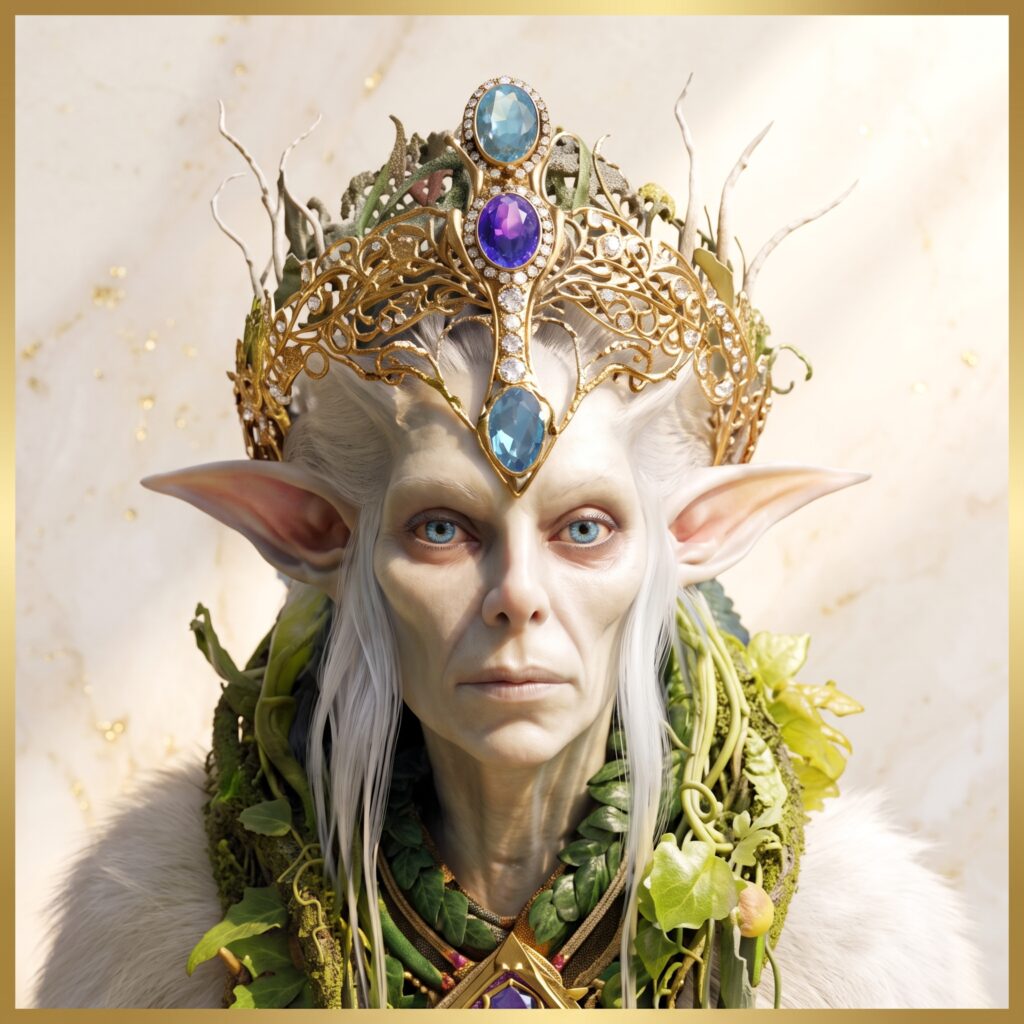
Noya Rao was the first plant dieta Mokan entered and became the beginning of a relationship that would shape the next twelve years of his apprenticeship.
From the beginning, the dieta went deep. It brought trauma to the surface, awakened experiences the indigenous tradition around him understood through the language of demons and spiritual forces, and activated what Mokan experienced as a spell that took almost five years to clear.
Noya Rao also began teaching him about shitana — the darker or disharmonious side of plant knowledge — and how those forces could be understood, worked with and eventually harmonized.
Over time, this relationship became the foundation of the MERAYA curriculum, including the 12 Simulations and what Mokan now understands as the Path of the MERAYA.
Within MERAYA, Noya Rao is honored as the Founder because the path itself was born through this apprenticeship.
Noya Rao was the first dieta, or plant apprenticeship, that Mokan entered.
And from the beginning, the relationship was intense.
The dieta brought unresolved trauma to the surface and opened experiences that the indigenous people around him understood through the language of demons, spirits and energetic forces. It also awakened what Mokan experienced as a spell within himself — a pattern that would take almost five years of continued work to fully clear.
At the same time, Noya Rao began teaching him about shitana: the darker, disharmonious side of plant knowledge, and the ways those forces can become entangled within a person and within their plant dietas.
For Mokan, this was where the real apprenticeship began.
The Lineage of Noya Rao
Mokan first encountered the physical Noya Rao tree through his maestro. The stories of its lineage came later.
According to the tradition that was passed to him, the physical tree had not been seen by most people for generations.
One of the elders within the lineage, a maestro who lived beyond one hundred years of age, had inherited a wooden pipe made from Noya Rao. He would smoke the pipe while dieting and use it as a way of connecting with the plant.
Over time, he became known as the Trunk of Noya Rao.
His brother carried another part of the transmission.
Traditionally, receiving the dieta required transmission through one of these two maestros. The Trunk of Noya Rao would install what was described as an etheric chip within the crown of the student, while his brother transmitted the airs of Noya Rao so that the dieta could be received.
Mokan’s first maestro later married into this family.
After smoking the Noya Rao pipe, he received a vision connected with the plant. He later purchased land in the jungle and discovered five living Noya Rao trees growing there.
At night, their leaves appeared luminescent, glowing within the darkness of the forest.
This was the physical Noya Rao that Mokan first came to know and eventually diet.
The Enlightened Potential of Noya Rao
Through more than a decade of relationship with the plant, Noya Rao showed Mokan something very specific:
Its potential is enlightenment.
Within MERAYA, this is not treated as a metaphor that needs to be softened. It is the potential Mokan understands the plant to carry through what it has shown and taught him directly.
But there is an important distinction.
When a person diets a plant, the relationship is not understood simply as learning information from it.
The human and the plant begin to merge.
The apprentice becomes, in Mokan’s understanding, a kind of hybrid — part human, part plant.
The qualities of the plant become part of the person.
But so can the plant’s shitana.
And every additional dieta brings another plant relationship into that same human system.
This became one of Noya Rao’s most important teachings.
When the enlightened potential of Noya Rao merges with a person who is also carrying other plants, other dietas and the shitana attached to those relationships, Noya Rao itself becomes part of that hybrid system.
Its full potential is therefore no longer expressed in its pure form.
Mokan has worked with and learned from many indigenous maestros and elders throughout his apprenticeship, yet he has never encountered someone whom he believes has fully embodied the frequency and potential that Noya Rao has shown him.
For him, this does not mean the potential is absent.
It means the work is unfinished.
Removing the Shitana
This understanding changed the direction of Mokan’s apprenticeship.
The goal could no longer simply be to collect more plants, complete more dietas or accumulate more spiritual knowledge.
The work became learning how to identify and remove the shitana already carried within the system.
Over the next twelve years, Noya Rao took Mokan through what he describes as a wild process of transformation.
Again and again, he was brought into experiences involving trauma, attachment, energetic entanglement, spiritual influence, identity, power and the ways human beings interpret realities they do not fully understand.
Gradually, these teachings organized themselves into what became known as The 12 Simulations.
The 12 Simulations became a map for recognizing and working through the different forms of distortion, entanglement and shitana that may be carried within a person and within their plant relationships.
The deeper purpose is not simply to understand these forces.
It is to master the relationship with them.
Within Mokan’s understanding of the path, as a person progressively masters the 12 Simulations, they become increasingly capable of clearing the shitana carried within their dietas.
And as that interference is removed, the possibility emerges for the deeper potential of Noya Rao to become increasingly available.
A Reflection of Human Potential
This is where the teaching of Noya Rao extends beyond the plant itself.
For Mokan, the enlightened potential of Noya Rao became a reflection of the enlightened potential within the human being.
The path is therefore not simply about becoming a better curandero, completing more dietas or gaining greater spiritual abilities.
It is a path of purification and development.
A path of recognizing what has become part of us.
A path of understanding what is distorted.
A path of harmonizing what can be harmonized.
And a path of progressively removing what prevents the fullest expression of what we can become.
Whether someone applies themselves with enough focus, discipline and devotion to fully embody that potential is another question.
Mokan has not yet encountered a maestro or elder whom he believes has completely attained it.
But the potential shown by Noya Rao remains clear.
The Birth of MERAYA
This is why Noya Rao is honored within MERAYA as the Founder.
The MERAYA curriculum was born from the teachings that emerged through this relationship.
The 12 Simulations came through this path.
The understanding of shitana and harmonization came through this path.
The movement from healing into development came through this path.
And what Mokan now calls the Path of the MERAYA emerged through this relationship.
At its deepest level, MERAYA is a path toward enlightenment.
Not because completing a ceremony, a dieta or a course automatically creates enlightenment.
But because Noya Rao has shown a developmental path toward that potential.
The map can be taught.
The simulations can be understood.
The shitana can be worked with.
The path can be walked.
Whether a person is willing to apply themselves deeply enough to embody its full potential remains their responsibility.
Noya Rao reveals the potential. The Path of the MERAYA is the work of becoming capable of living it.
THE PEOPLE CARRYING THE PATH
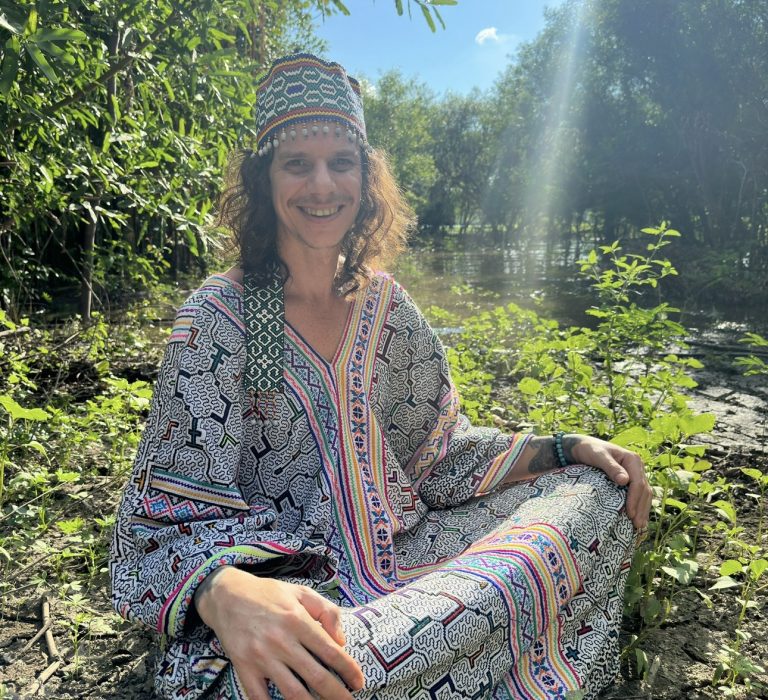
Maestro Mokan Noi — Co-Founder
Teacher · Apprentice
Mokan’s path began through his own search for healing and eventually led him from personal development and psychology into years of Amazonian plant apprenticeship and dieta.
By 2024, he had spent more than a decade studying and dieting with Amazonian plants, including more than six years of dieta or apprenticeship with Amazonian plant teachers.
His work within MERAYA focuses on bringing these worlds together — helping people move beyond powerful experiences into greater understanding, development, discernment and service.
He remains a student of the path as much as a teacher of it.
His role is not to tell people what to believe. It is to help them develop the maps and capacities to navigate their own experience.
Mokan Noi began his path of awakening in 2013, when he entered a 12-step rehabilitation program after nearly twenty years struggling with drug addiction. The process was not simple or linear. It became the beginning of a much wider search to understand the forces shaping his inner life and to find a way of living beyond the patterns that had controlled him for so long.
In 2015, that search led him into the world of Ayahuasca. He also travelled to Gabon, Africa, where he participated in an Iboga initiation with the Bwiti tribe. Still looking for deeper answers, he eventually arrived in Peru, connected with the Shipibo-Konibo people and began the long process of dieting Amazonian plants.
Alongside his plant apprenticeship, Mokan explored a wide range of therapeutic, psychological and shamanic approaches. His studies included past-life regression therapy, parts therapy, hypnosis, NLP, energy healing and psychology. He was also initiated into multiple shamanic lineages from different parts of the world as he continued building a practice that could help him make peace with addiction and understand the deeper patterns beneath it.
Throughout these years of study, his recovery also continued to develop. There were relapses along the way, but he kept returning to the work. By 2024, he had been completely clean for eight years.
Over time, Mokan began integrating the different systems he had studied into a healing and developmental framework intended to help people take greater responsibility for their own inner world and their relationship with energy, emotion and meaning. He came to understand addiction not simply as the central problem, but as a diversion from the deeper shadows and unresolved material being activated within the psyche.
Today, Mokan lives in the Peruvian jungle and continues to approach this work as a student. Daily study, healing, plant apprenticeship and personal evolution remain central to his life. His passion for the path continues to drive both his own learning and his desire to share what he has discovered with others.
![IMG-20221127-WA0008[1]](https://www.meraya.org/wp-content/uploads/elementor/thumbs/IMG-20221127-WA00081-pycg4flk31sytng6kh6nntuidf3jg1zd8vk9bewxg8.jpg "IMG-20221127-WA0008[1]")
Maestro Ania — Co-Founder
Integration & Development
Ania brings a deeply relational and integrative approach to MERAYA.
By 2024, she had spent more than seven years studying and dieting with Amazonian plants and had completed more than a full year of plant dieta or apprenticeship with Amazonian plant teachers.
Her background includes transpersonal and integration coaching alongside Qi Gong, nutrition, parts therapy, meditation, breathwork and Amazonian plant apprenticeship.
Her work is rooted in helping people bring what they discover in extraordinary experiences back into ordinary life.
Insight matters. What we become through it matters more.
Ania is a transpersonal and integration coach whose way of working is deeply nurturing, transparent and relational. She has developed experience across a broad range of practices, including Qi Gong, nutrition, parts therapy, meditation and breathwork.
Her studies have continued both within Shipibo-Konibo and wider Amazonian plant-medicine culture and across disciplines that explore expanded states of consciousness, integration and human development.
Ania has a natural capacity for teaching and has become especially connected to the discipline of plant dieta. She supports and leads across many areas of the school and brings a grounded, caring presence to the people moving through the work.
Her first plant dieta took place in the jungle within strict Shipibo-Konibo traditions. During that apprenticeship, she completed six months in relative seclusion — an experience that gave her direct understanding of the patience, discipline and inner listening that dieta can require.
At the heart of Ania’s work is empowerment. She seeks to help people breathe more fully into the truth of who they are rather than becoming dependent on a teacher or an experience. Her wider vision is to bring useful shamanic practices into everyday life so that insight becomes something lived — supporting people to create and inhabit a life that is genuinely aligned with who they choose to become.
“Tradition Is Not Something We Collect.
It is something we enter with humility, relationship and responsibility.”
ELDERS & TRADITIONAL TEACHERS
Elders & Traditional Teachers
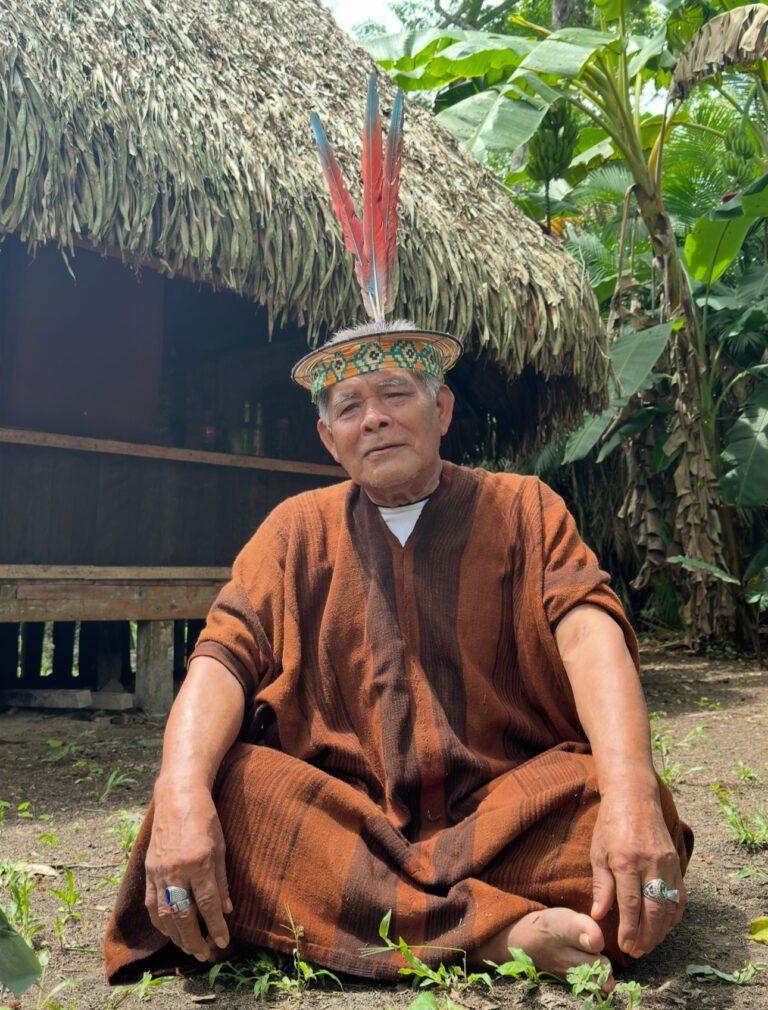
José Luis
Meraya Banco · Spiritual Elder
José Luis represents a lifetime of traditional plant study and dieta.
By 2024, he had spent more than fifty years studying and dieting with plants. During that path, he completed a seven-year period of secluded plant dieta or apprenticeship and reached the highest level within his Mestizo lineage of Meraya Banco.
Depth takes time.
José Luis’s path speaks clearly through the depth of his apprenticeship.
By 2024, José Luis had devoted more than fifty years to studying and dieting with medicinal and teacher plants. Within that lifetime of practice was an extraordinary seven-year period of secluded plant dieta — a sustained apprenticeship requiring long-term discipline, patience and commitment.
Through this path, he graduated to the highest level within his Mestizo lineage of Meraya Banco.
His place within MERAYA is grounded in the depth of time he has given to the work: decades of study, a multi-year secluded apprenticeship, and a life shaped by the responsibilities of his lineage.
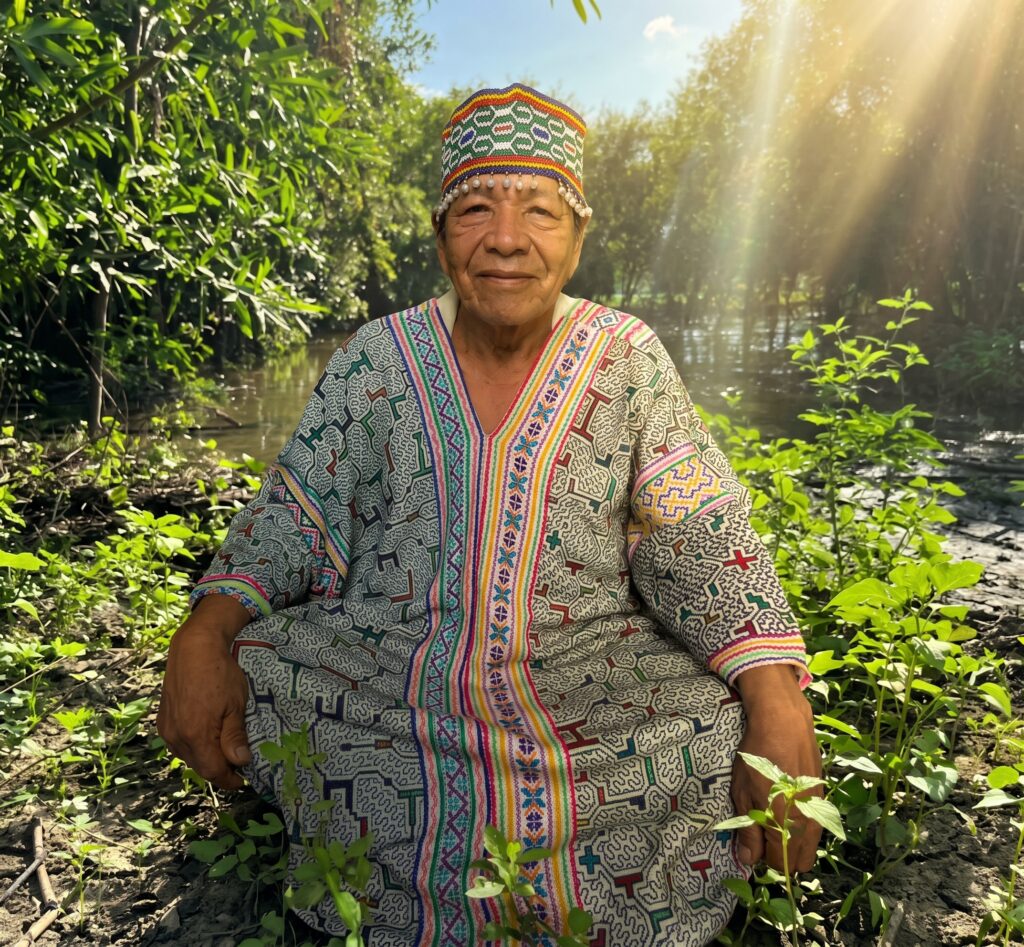
Maestro Miguel Ochavano
Spiritual Elder
Born in Paoyan, Miguel’s relationship with medicinal plants developed through family, illness, apprenticeship and decades of practice.
By 2024, Miguel was sixty-six years old and had spent approximately sixty years studying and dieting with plants.
His teaching emphasizes patience, relationship, continued study and service rather than status.
The deeper the path becomes, the more there is to learn.
Don Miguel was born in Paoyan and has walked the path of medicinal plants for more than fifty years. His relationship with plant medicine did not arise from curiosity or trend. It grew through lived experience — through illness, hardship and long periods of learning that demanded patience, humility and endurance.
For many months, and later for many years, he worked closely with powerful medicinal plants as part of his own healing journey. In his understanding, those plants became teachers. Their work was not fast, but precise. Through consistent practice and deep respect for the medicine, his understanding continued to grow. The more he practiced, the more he learned. The more he listened, the more was revealed.
His path has always been rooted in service. Miguel feels a strong responsibility to share what he has learned, including with people who travel from Europe and other parts of the world because they feel called to understand traditional plant medicine. He speaks of his love for the medicine as something grounded in love, discipline and care for life itself.
Teaching is central to who he is. He shares his experience openly with brothers and sisters, with his community and with people who approach the medicine sincerely. In ceremony and practice, he works with sacred medicines, including Ayahuasca, while emphasizing respect, preparation and integration.
For Miguel, the medicine path is not solitary. He continues to study, practice, read and deepen his understanding alongside other medicine carriers. Growth comes through shared experience, humility and devotion to the work.
He carries deep gratitude for his friends, his companions and all those who choose to walk this path with integrity.
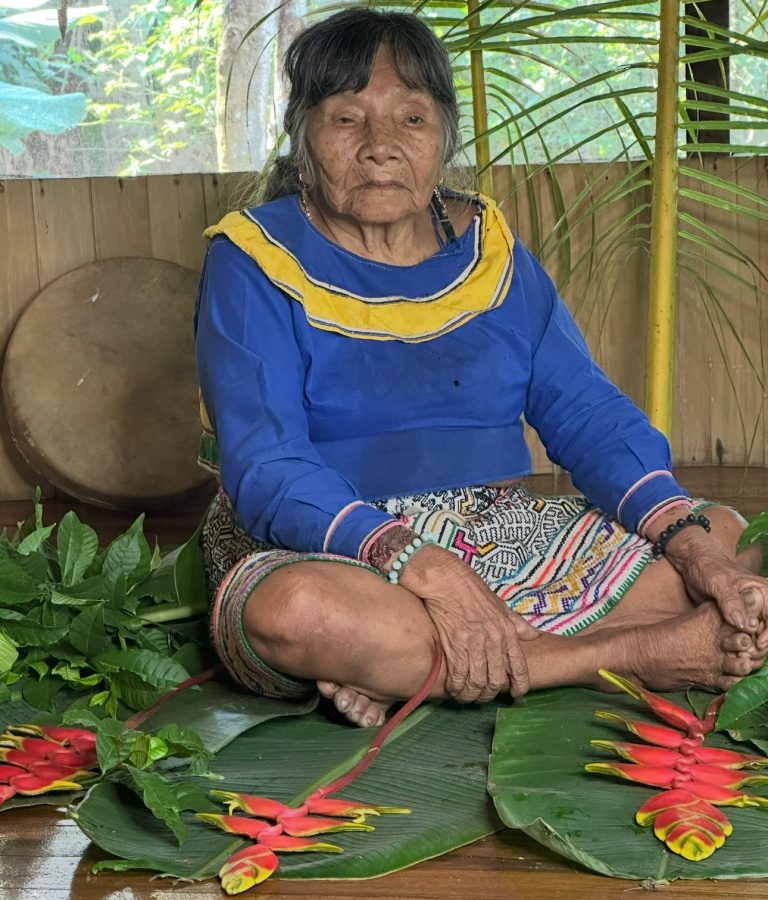
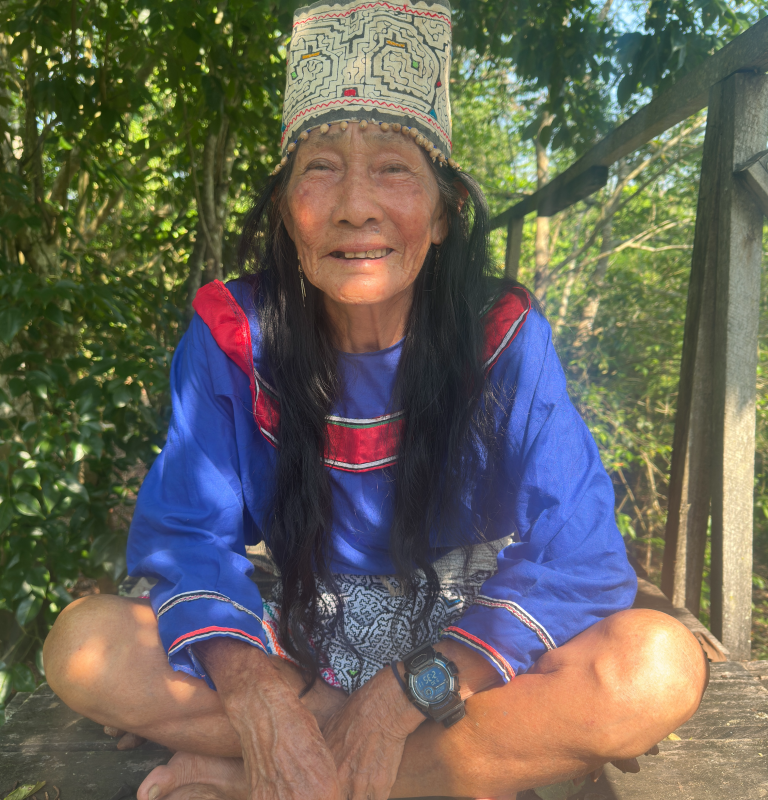
Maestra Antonia Mahua
Mama Antonia · Mamachaqui · Spiritual Elder
Mama Antonia entered plant apprenticeship when she was very young and has carried traditional knowledge across most of her life.
By 2023, Mama Antonia was eighty years old and had spent more than sixty-six years studying and dieting with plants.
Her story speaks strongly to resilience, song, plant relationship, loss, family lineage and service to community.
Knowledge can be inherited. Wisdom is shaped by how it is lived.
Mama Antonia is a respected Curandera whose life has been shaped by traditional healing, plant apprenticeship, deep personal loss and a long commitment to service. Her journey began under the guidance of her father-in-law, a man remembered for his insight and knowledge of plant medicine. His teaching changed the direction of her life.
At around thirteen or fourteen years old, Mama Antonia entered her first dieta. That early apprenticeship became a rite of passage and awakened what she understood as her calling to become a healer. Through the voice and presence of her partner, Papa Benjamin, she also discovered a powerful relationship between healing and song. That first dieta helped clarify a purpose that would remain central to her life: caring for people who were suffering from illness.
A central relationship in her development was with Noya Rao, also known as palo volador. Within Mama Antonia’s spiritual understanding, this plant became an important guide. During dieta she experienced insights, visions and encounters that she understood as deepening her connection with the spiritual world. Each stage of apprenticeship revealed new mysteries and strengthened her commitment to healing and helping others.
Her first dieta took place in Painaco alongside Papa Benjamin, and later she continued her work in Paoyan, where she experienced further teachings and revelations. She describes moving through these periods by following her intuition and remaining committed to the path that had opened before her.
These experiences gave her renewed strength and a deeper sense of purpose. Emerging from dieta, she felt increasingly called to share what she had learned with her community. For her, the work expanded both her vision and her responsibility to continue developing in service to others.
Her life was also marked by profound grief. During a visit to Yarinacocha, Mama Antonia experienced a miscarriage. Her husband responded by working with the plant Ayahuma as part of the traditional healing approach they carried. This was not her only loss. She experienced multiple miscarriages throughout her life. Within the traditional spiritual interpretation held in her family and lineage, some of these events were understood as the result of spiritual attacks by harmful forces. Whatever the interpretation, the losses themselves were real and deeply painful, and Mama Antonia continued forward through them.
Ayahuma became an important plant within her practice. She describes singing the sacred songs associated with the plant as a way of protecting her life force. Within her spiritual worldview, silence at certain moments could leave a person vulnerable, while song created connection and protection. These healing melodies became a lifeline — part of the way she understood her relationship with the spiritual world and her capacity to move through perceived threats.
In later years, she drew strength from the final words of her husband, who encouraged her to continue their work alongside their son, Augustín. That bond became another source of resilience when she faced further heartbreak, including the loss of her youngest son, Carlos. Within her traditional understanding, this loss too was associated with spiritual attack.
Rather than ending her commitment to the work, these experiences deepened her compassion. They strengthened her desire to help other people move through suffering and adversity. Across the years, Mama Antonia has remained a source of guidance within her community, carrying forward the knowledge entrusted to her and continuing the healing work that has shaped most of her life.
Maestra Zerella
Spiritual Elder
Zerella comes from a family relationship with traditional healing and is especially remembered for the warmth, nurturing quality and song she brings to her work.
By 2024, Zerella was seventy-four years old and had spent more than sixty-two years studying and dieting with plants.
Her path has included decades of relationship with medicinal and dieta plants and work both inside and outside Peru.
Strength does not always arrive loudly.
Maestra Zerella is remembered for a warm and nurturing presence. Her icaros and her way of relating to people carry a gentleness that many experience as reassuring, particularly during demanding plant-medicine work.
Her apprenticeship developed over many years. At one stage she followed a prescribed diet for twelve years, entering a long process of study and healing. Traditional medicine also formed part of her family inheritance: both of her grandfathers were respected healers who shared their knowledge of medicinal plants with her. Among the plants she has worked with, Ayahuasca became an especially important ally in her life.
Although one of her grandfathers has passed away, Zerella describes his teachings as continuing to live within her. She sings in reverence to medicinal plants and understands song as part of an ongoing relationship with their spirit. Her shamanic path began when she was very young. At the age of fifty-six, she began supporting communities across North America, and she later worked with Western participants in Tarapoto — experiences that she felt developed her abilities even further.
During the pandemic, she adapted the way she worked so that she could continue supporting people through long-distance connection. Her dieta practice has included plants such as Bobinsana, Rena Caspi, Peri Peri, Uña de Gato and Ayahuma. Within her tradition, each plant is understood as carrying distinct qualities, teachings and healing applications, which she weaves into her work.
Zerella is particularly known for helping people when ceremonies become emotionally or energetically intense. When someone feels overwhelmed, frightened or flooded with emotion, she works gently to help them return to calm, release fear and tears, and regain a sense of steadiness.
Her apprenticeship has also included a year-long diet with Florida Water, a practice she understands as strengthening her relationship with the natural and spiritual elements of the work. She holds a deep belief in the power of medicinal plants, including Ayahuasca, Chacruna and the potent Ayahuma. Her work with Ayahuma has included carefully prepared, disciplined periods of practice lasting around three months.
Within her worldview, different plants have different roles in cleansing, restoring and revitalizing the spirit. Many of the people who come to her carry significant emotional pain or despair. Her intention is to help them release what is weighing them down so they can leave feeling lighter and more connected with themselves.
With a life devoted to traditional healing, Zerella continues to embrace her role as a Curandera and medicine carrier, nurturing life and seeking to restore balance. People have travelled long distances to receive her guidance, drawn by her experience, her relationship with plant medicine and the loving quality she brings to the work.
Her story is ultimately one of devotion: a long relationship with nature, family teaching, song and the healing traditions she has carried across decades.
MAESTROS & COLLABORATORS
Maestros & Collaborators
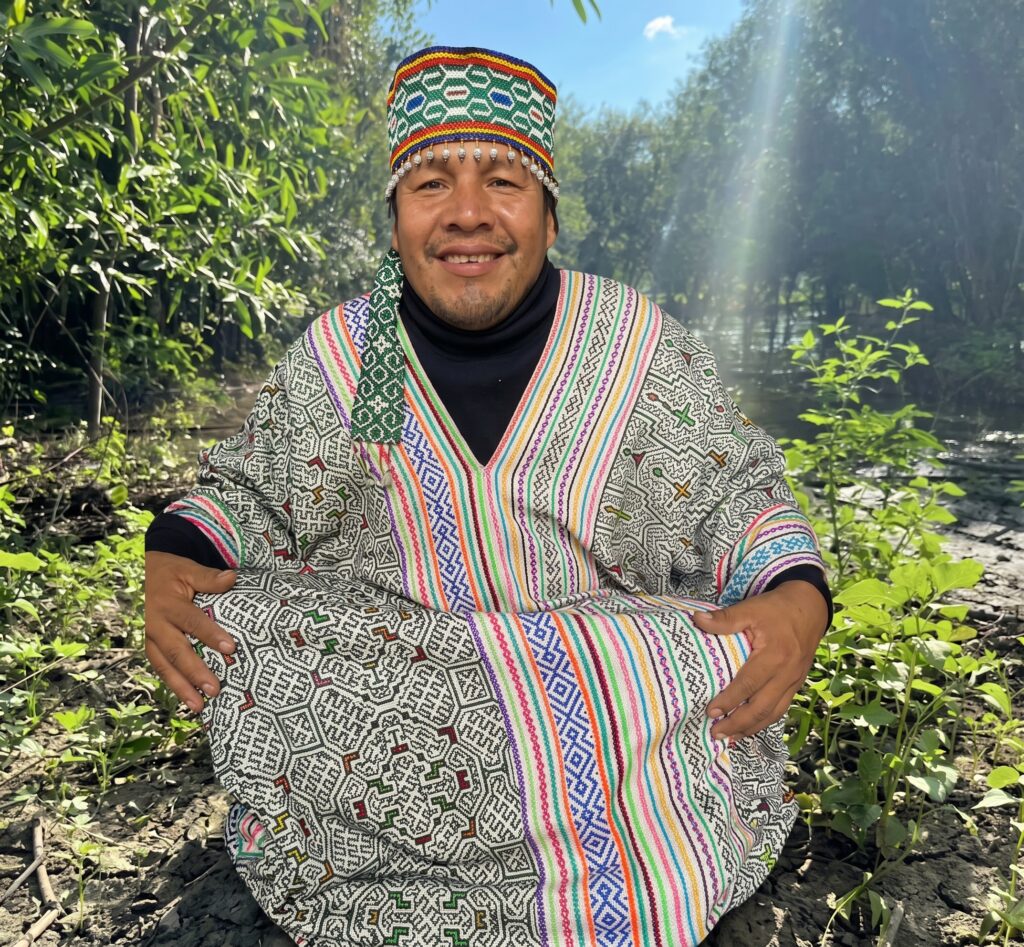
Maestro Ismael Ochavano
Mokan Piko
Ismael describes his path as beginning first through his own need for healing and later through long periods of plant apprenticeship.
By 2024, Ismael was forty-four years old and had spent more than thirty-seven years studying and dieting with plants.
His Shipibo name, Mokan Piko, is understood as “the one who drinks from the sacred clay vessel, like the macaw, and places it gently aside, carrying the wisdom in quiet reverence.”
His teaching places particular emphasis on dieta, icaros, humility and the responsibility of the practitioner to continue working on themselves.
When people ask Ismael who he is, he describes himself as a healer — not because it was a career he consciously chose, but because he understands it as a path the plants gave him after first leading him through suffering and then into devotion.
He is a maestro vegetalista, born and raised deep in the Peruvian Amazon, in a place far from the towns, where roads give way to rivers and where traditional relationship with the forest remains part of everyday life.
Before becoming a healer, Ismael was a patient. Mental, physical and spiritual pain brought him to the plants. He describes carrying sadness and wounds he could not fully explain until life itself became too heavy to continue in the same way. His search began because he needed healing. Through that process, he came to believe that healing ultimately arises from within, while the plants can help open the door.
The first time he drank the medicine, he describes meeting the plants not through ordinary physical contact but through visions, songs and silence. Those experiences challenged his sense of identity and showed him both who he was and who he was not. From there, he entered long periods of dieta in the jungle, spending time with the trees, the river and — within his spiritual understanding — the spirits of the plants as teachers. He says those dietas taught him how to listen and how to see beyond the surface of things.
When Ismael works in ceremony, he does not understand the work as coming from him alone. He begins with prayer, calling upon the Creator and asking for protection. He speaks to the medicine, to the force he understands behind it and to the light. His intention is to be shown what the person in front of him needs — not only physically, but emotionally and spiritually. In his view, people often arrive because something within them is asking to be addressed, even when they cannot yet name it themselves.
A central part of his work is the singing of icaros. He does not regard them as ordinary songs, but as living medicine connected to the plants he has dieted. Different songs are used for different purposes: calming, cleansing, protection and responding to particular discomforts such as fear or headache. He pays attention to how a person’s body and state change while he sings and chooses songs according to what he feels the moment requires.
He remembers one woman arriving at her first Ayahuasca ceremony overwhelmed by fear. She was shaking and physically tense. Ismael felt that she was carrying pain that had been with her for many years and, within his spiritual interpretation, perhaps even beyond this lifetime. On the first night, she felt as though she was dying. He sang for her and worked to create a sense of protection. By the second night, he remembers her entering differently — smiling, steadier and more connected with herself. For him, this is part of the meaning of the work: helping people return to their center.
Ismael repeatedly emphasizes that his path is based on lived experience rather than ideas alone. He speaks about healing because he has had to move through his own healing and because he has spent years supporting others. In his view, a practitioner cannot responsibly offer what they are unwilling to work through within themselves.
He also describes the medicine path as demanding sacrifice and honesty. It repeatedly brings a practitioner into contact with their own shadow and asks them to become more humble. His definition of a maestro is therefore not someone who has become perfect, but someone who continues submitting themselves to purification, discipline and learning.
Everything he uses in ceremony has a place within that system. Mapacho tobacco is used for protection. Agua Florida is used to clear what he understands as heavy energy. Plants such as Bobinsana, Chiric Sanango and Ajo Sacha have been part of the dietas through which he learned to sing, perceive and work. His altar, tools and songs are not decorations to him; they are elements of relationships developed through discipline and respect.
Ismael says he has no interest in impressing people or displaying power. He sees his role as service: holding the space, protecting the ceremony and singing the songs that allow healing to unfold. He does not claim ownership over another person’s healing. In his words and worldview, he opens the door.
His grandparents were healers who worked with plants, bark and flowers. They did not have access to the hospitals and clinics of the modern world; the forest was their pharmacy and classroom. Ismael carries that family knowledge with pride while also expressing respect for modern medicine. If he believes someone has an illness that plant work cannot appropriately address, he tells them to see a doctor. For him, healing is not about defending a tradition out of pride. It is about using what genuinely helps.
What he most wants people to understand is that, within his worldview, the forest and the medicine are alive and relationship matters. He asks people to approach the work with humility and seriousness. To him, this is not entertainment or a game. It is sacred work, and for people who are genuinely ready to engage with it, he believes it can change their lives.
Ismael understands himself as being here because the plants called him into the path. His invitation to others is simple: if you feel called too, approach slowly, respectfully and with humility.
You are welcome.
— Maestro Mokan Piko, Upper Amazon of Peru
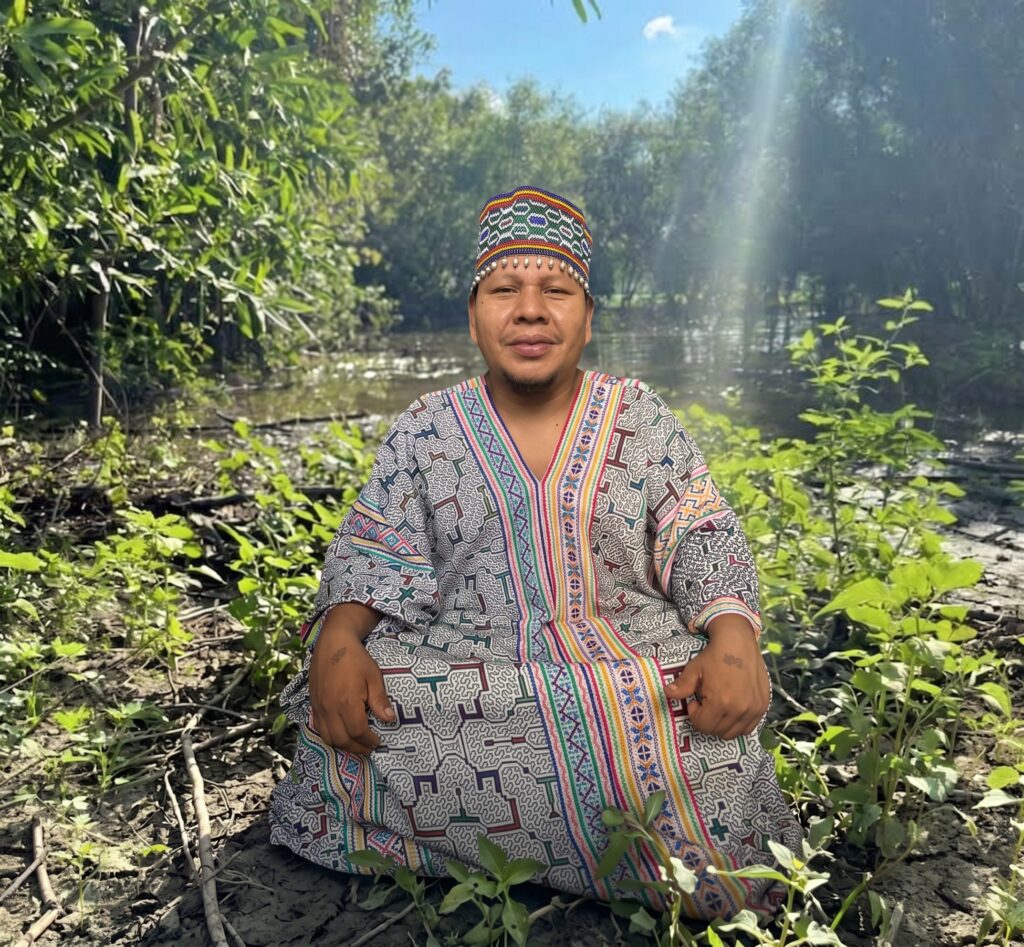
Maestro Avigael Ochavano
Saken Rawa
Raised within a family of traditional healers along the Ucayali River, Avigael began learning through observation, family teaching and dieta from a young age.
By 2024, Avigael was thirty-seven years old and had spent approximately thirty years studying and dieting with plants.
His Shipibo name, Saken Rawa, is understood as “the one who carries the living design of Ayahuasca” — an image of energy connecting gradually, like the vine itself, revealing its vision little by little.
His perspective emphasizes something MERAYA deeply respects:
Ayahuasca is not the whole path. The foundation is apprenticeship.
Avigael is from the community of Santa Rosa de Dinamarca along the Ucayali River. He was born into a lineage of traditional healers — curanderos — where knowledge of medicinal and teacher plants is passed from one generation to the next. For him, the path began in childhood. He does not describe it as something he simply chose; within his spiritual understanding, he feels that the plants and spirits called him into it.
His father was a respected vegetalista and became his first teacher. From a young age, Avigael watched him prepare medicine, enter dietas and work with people who came for healing. His father initiated him while he was still young. Importantly, his first apprenticeships were not with Ayahuasca. They began with master plants. Ayahuasca entered later, after the foundation had been established. Avigael considers that sequence essential.
At first, he learned by observing: how his father cooked, how he sang and how he moved during ceremony. Later came his own dietas with plants such as Bobinsana, Ajo Sacha and Chiric Sanango. He spent periods alone in the forest, eating a very simple diet, drinking the plants each day and listening for what they might teach. He describes those teachings as arriving through dreams, visions and sensations in the body.
During his first ceremony with Ayahuasca, Avigael remembers seeing a jaguar come close and look directly into his eyes. His first response was fear, but he later interpreted the experience as a message of protection and inner strength. During that same night, he says he heard icaros for the first time — not from someone singing outside him, but internally. He understood them as coming from the plants he had dieted.
For Avigael, dieta is the foundation of the work. He is clear that simply drinking Ayahuasca does not make someone a healer. In his tradition, dieta is the discipline through which a person learns to work with energy, cleanse, develop perception and build a relationship with the plants. Over time, those relationships begin to guide the practitioner.
He has dieted with many plants. He associates Bobinsana with opening the heart and compassion. Chiric Sanango is understood as a powerful plant for protection and clearing heavy energy. Ajo Sacha has been part of deep cleansing work. Piñon Colorado is regarded as a warrior plant connected with defence, while Marosa carries a softer quality. Avigael emphasizes that every plant has its own character, song and relationship. Some dietas are gentle. Others are demanding or extremely strict.
Through these apprenticeships, he began receiving icaros. He does not understand these songs as compositions invented intellectually. In his experience, they arrive through ceremony, dreams or the silence of dieta. He describes the icaro as the voice of the plant — something that can guide a purge, shape a vision, cleanse, open the heart or help close a ceremony. When he sings, he believes he is calling upon the relationships formed with the plants he has dieted.
His training also includes traditional forms of diagnosis. He listens to what a person tells him but also pays attention to their body, color, pulse and what he describes as their energetic state. During ceremony, he believes the plants may reveal symbolic information about what a person is carrying. He gives examples such as seeing a snake around someone’s stomach and interpreting it as trauma held in that area, or hearing an inner message that points toward something from the person’s history. For him, learning to perceive beyond the obvious is part of the apprenticeship.
Avigael also speaks openly about the darker side of the traditional worldview in which he was trained. He describes experiences interpreted as spiritual attacks, envy, jealousy and energetic “darts” sent by other practitioners. Because of this, he places strong importance on protection, on dieting plants associated with strength and defence, and on keeping both the body and ceremonial space clean. Tobacco and mapacho are important tools within this system, used not simply as smoke but as part of cleansing and sealing practices. In his tradition, song and smoke work together as forms of protection.
He has repeatedly had to return to his own healing as well. The path has included fear, sickness, loneliness and periods of self-doubt. When he feels lost, he returns to dieta — back to the forest, silence and listening. He describes the plants as reminding him why he is there.
Today, Avigael serves people who arrive with many different forms of difficulty — emotional, spiritual and physical. He does not describe himself as the source of their healing. Within his worldview, the plants do the deeper work. His responsibility is to guide the process, protect the ceremony and sing the right icaro at the right moment. Some ceremonies are demanding and some states feel heavy, but his practice is built around trust in the medicine and in the apprenticeship behind it.
Despite decades of experience, Avigael says he does not consider himself a finished master. He remains a student. The forest is his teacher. Every plant is another book and every dieta another chapter. There is always more to learn, more to clean and more to remember.
His message to people approaching the work is consistent: come with respect, humility and patience. Do not treat it like a game. The work is sacred, and the learning never truly ends.
— Maestro Saken Rawa, Upper Amazon of Peru
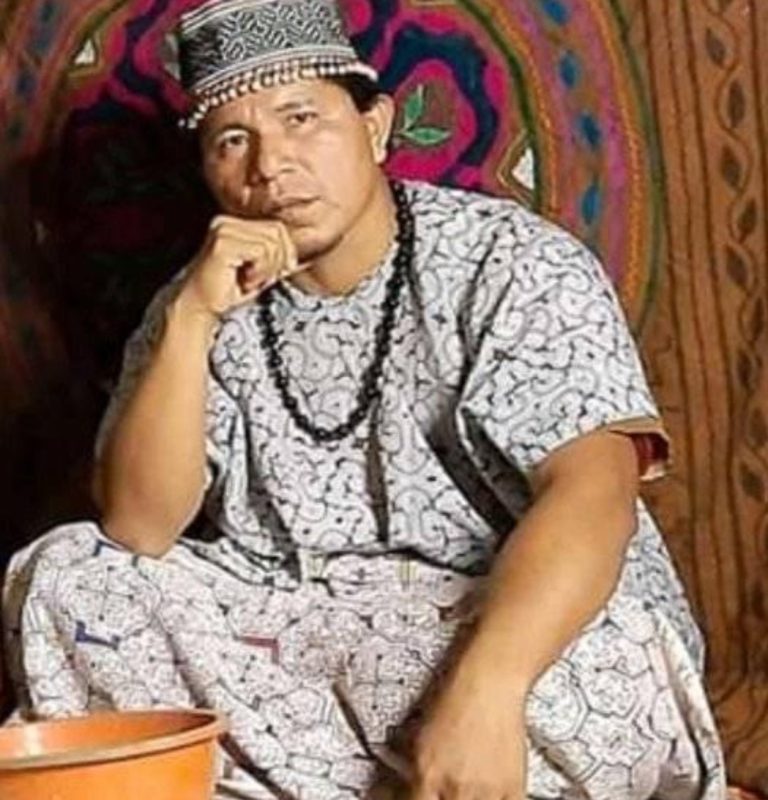
Maestro Rusbar Ochavano
By 2024, Rusbar had spent more than thirty years studying and dieting with plants.
His path has been shaped by family apprenticeship, traditional healing and music — especially icaros and guitar.
Plant knowledge, song and family lineage meet in the way he serves.
By 2024, Rusbar was forty years old and had devoted approximately thirty years to studying and practicing ancestral plant medicine.
His apprenticeship began under the guidance of his uncles and grandparents, respected teachers of traditional healing in the community of Santa Isabel de Babanillo. From an early age, they introduced him to medicinal plants and to the practices involved in preparing oneself to work responsibly with other people.
Rusbar speaks with deep gratitude for those elders. Their teaching shaped not only his understanding of plants but also the way he learned to guide himself with wisdom and integrity. They taught him how to enter plant dietas and how, within their tradition, a practitioner learns to receive the qualities, energy and strength of the plants in order to support healing in themselves and others.
Music also became central to his path. Rusbar is known as both a healer and a musician. He sings icaros — the sacred healing songs of his tradition — and also brings guitar into ceremonial settings. For him, music is not separate from the healing process; it is woven into the way he works and relates to the people in his care.
The teaching passed down through his family repeatedly returned to the plants themselves. His elders emphasized that the practitioner’s attention should remain on the plants and on the disciplined relationships developed through apprenticeship, because those relationships are understood as the foundation for supporting deep healing.
Rusbar remains committed to carrying that family legacy forward. His intention is to continue sharing the knowledge he inherited, the healing potential he understands within medicinal plants, and the music that has become inseparable from his way of serving.
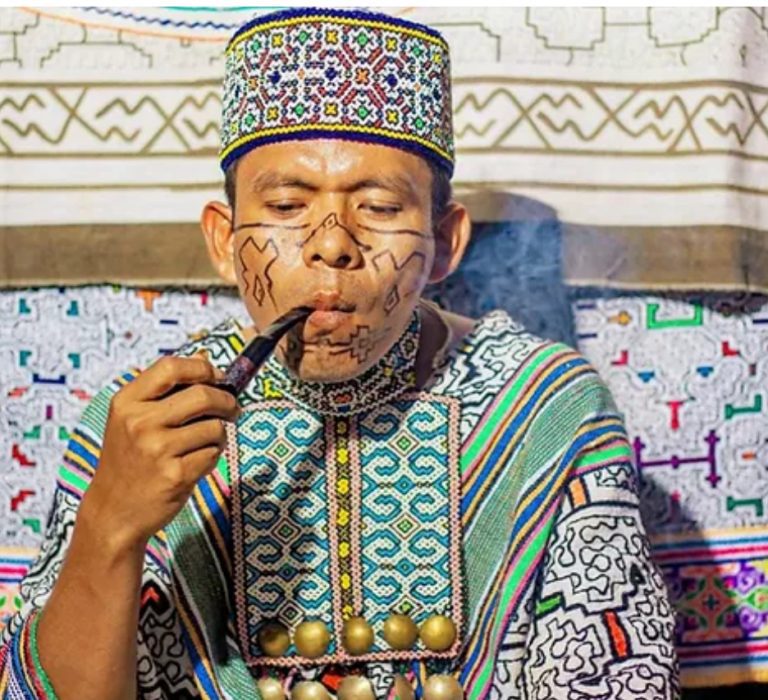
Maestro Marco Antonio
Korin Mea · Binan Mane · Onanya
Marco Antonio grew up within Shipibo-Konibo culture and describes traditional medicine, plant dieta and music as central parts of his life.
By 2024, Marco Antonio had spent more than twenty years studying and dieting with plants.
His work bridges traditional plant practice, music, family lineage and an ongoing commitment to learning, presence and service.
Known in the artistic world as Korin Mea, Marco Antonio is an Onanya — a traditional doctor within the Shipibo-Konibo healing tradition. Alongside his healing work, he is also a musical artist whose performances blend Cumbia Mashá and Cumbia Ícaro. His Shipibo name, Binan Mane, translates as “Brilliant Young Man,” a name associated with wisdom and connection to ancestral values.
Marco Antonio is deeply proud of his Shipibo-Konibo heritage. The Shipibo-Konibo are Indigenous peoples whose communities have lived along the Ucayali River in the eastern Peruvian Amazon for centuries.
From an early age, Marco received traditional knowledge through his grandparents, particularly knowledge connected with master and medicinal plants such as Ayahuasca. He was later ordained as an Onanya, working within a tradition that understands medicinal plants and the relationships developed with them as resources for supporting both physical and emotional healing.
He was born in the Indigenous Shipibo community of Paoyhan, in the lower Ucayali region of Loreto near Contamana. His childhood was immersed in the Amazon: fishing, hunting and learning about the plants and animals around him. Many members of his family were respected shamans connected with the Paococha community, and he grew up surrounded by the spiritual and medicinal practices they carried.
Inspired by his ancestors, Marco chose to continue that path and dedicate his life to traditional medicine.
His relationship with icaros and the healing traditions of his people was strengthened through his uncle, the shaman Manuel Mahua, who shared his knowledge with him. Marco describes visions with Ayahuasca as confirming that the shamanic path was part of his life. After the death of his father, he felt he had inherited a responsibility to carry forward his father’s knowledge and became increasingly committed to traditional medicine.
Under Manuel Mahua’s guidance, Marco was ordained as an Onanya at the age of eleven, beginning what became a lifelong commitment to samá — plant dieta.
During the first three months of his samá, Marco describes developing a profound connection with Ayahuasca. Within those experiences, he received what he understood as messages from his deceased father affirming that he had been chosen to continue the family’s healing legacy. These visions, teachings and the development of his abilities marked the beginning of a deeper relationship with the medicine.
Across his life, Marco reports having dieted with approximately fifty different master plants and trees. Some of the most challenging parts of his apprenticeship have involved confronting difficult emotions, thoughts and traumatic experiences. Rather than seeing these only as obstacles, he came to understand them as necessary parts of growth — what he calls “spiritual opportunities.”
In responding to those opportunities, Marco has developed a philosophy centered on dedication to the divine, presence and acceptance. He places importance on not feeding negative patterns of thought and emotion and on meeting reality as it is. One of the principles he expresses is: “Accepting who you are and how you are in each moment is crucial for growth, and staying in the present is what makes the difference.”
Marco continues to see himself as a lifelong student of Shipibo ancestral medicine. He keeps deepening his relationship with Ayahuasca and with the master plants he works with, understanding his abilities as something that must continue developing rather than something permanently achieved.
By 2024, Marco was based in Yarinacocha-Pucallpa, where he offered traditional healing work through his Spiritual Center, Dietas de Ayahuasca Healing Center, in the native community of San Salvador, approximately eighteen kilometers from the city of Pucallpa.
His work is rooted in what he understands as the ancient science of shamanism and in the discipline of plant dietas, or samá. For Marco, dieta is not an optional addition to the path. It is the foundation upon which traditional healing practice is built.
His work and dedication have become known within his Indigenous community and among people who have travelled from other parts of the world. He remains committed to sharing the knowledge and abilities he has developed and to supporting the people who come to him for help.
“A Teacher Can Open a Door.
The path still has to become your own.”
HOW WE WORK
Different Teachers. Shared Principles.
MERAYA does not ask every teacher to think, speak or interpret experience in exactly the same way.
Different traditions carry different maps.
Different plants teach differently.
Different people develop different strengths.
What matters is the foundation beneath the differences:
Humility. Practice. Discernment. Responsibility. Continued learning. Service.
Our aim is not to create dependence on teachers.
It is to help people become increasingly capable of understanding themselves, navigating their experiences and taking responsibility for how they live and serve.
THE PATH CONTINUES
Meet the Tradition Behind the People
The people on this page are part of a much larger story — families, communities, plant relationships and traditions stretching far beyond MERAYA.
Understanding the people matters.
Understanding the context they come from matters too.
Shipibo-Konibo & Amazonian Traditions
Explore the culture, plant knowledge, dieta, icaros and traditions surrounding the work.